


LOW MOQ 50pcs for custom designs
For made-to-order styles only. Existing wholesale products follow their separate ordering terms.
316 Stainless Steel Jewelry Wholesale Basics
What 316 Stainless Steel Jewelry Really Is in Wholesale
When I talk about 316 stainless steel jewelry wholesale, I’m talking about pieces made from an austenitic stainless steel alloy that contains chromium, nickel, and molybdenum.
In simple terms:
- 316 stainless steel = high‑corrosion‑resistance steel, strong enough for daily wear, stable in sweat, water, and most chemicals.
- It’s the same base family used in food, medical, and marine applications, which is why it performs so well in jewelry.
- In wholesale, 316 is usually used for: chains, rings, bracelets, earrings, pendants, and entry‑level body jewelry where you want durability without luxury‑metal pricing.
When you see “316 stainless steel jewelry wholesale” or “wholesale 316 stainless steel jewelry”, it means the products are manufactured and finished specifically for bulk B2B buyers who need consistency, repeatable quality, and scalable production.
Why 316 and 316L Dominate Jewelry Wholesale today
today, 316 and especially 316L dominate modern stainless steel jewelry for a few very practical reasons:
- Corrosion resistance: 316/316L holds up in sweat, showers, pools, humid climates, and even salt air far better than 304 or cheap unknown grades.
- Color stability: The natural steel color is bright, neutral, and non‑yellow, ideal as a base for PVD gold, rose gold, or black plating.
- Skin performance: 316L (“L” = low carbon) is widely used as “surgical grade stainless steel jewelry” and accepted as hypoallergenic stainless steel for most customers.
- Production efficiency: Factories worldwide are optimized for 316L stainless steel jewelry wholesale, which keeps costs stable and lead times predictable.
- Market expectation: Consumers now search for “waterproof stainless steel jewelry” and “non tarnish stainless steel necklaces”. 316/316L is the only realistic way to meet that promise at scale.
Bottom line: If you want to offer tarnish resistant jewelry wholesale that survives real daily wear, 316/316L is the new standard, not a premium upgrade.
Key Benefits for Wholesalers, Brands, and Online Sellers
Choosing high quality stainless steel jewelry wholesale in 316/316L gives you clear business advantages:
- Lower complaint rate: Less rust, tarnish, and green skin means fewer returns, refunds, and 1‑star reviews.
- Great value positioning: You can sell pieces as “waterproof, sweat‑proof, non‑tarnish” at accessible retail prices with healthy margins.
- Design flexibility: 316L is ideal for PVD coated stainless steel jewelry – 18K gold, rose gold, or black – plus mirror polish 316L without plating.
- Brand trust: Offering hypoallergenic stainless steel wholesale sets you apart from sellers pushing mystery alloys that turn black in a month.
- Global compliance: 316L is easier to align with REACH compliant stainless steel jewelry and CPSIA compliant jewelry supplier requirements when properly controlled.
If you want to build a long‑term, repeat‑purchase jewelry business (not a short‑term marketplace hustle), 316/316L gives you the best ratio of quality to cost.
Who Should Choose 316 Stainless Steel Jewelry in Bulk
From my experience, you should seriously consider 316L stainless steel jewelry wholesale if:
- You run a brand focused on “everyday jewelry” – pieces worn in the shower, gym, or beach.
- You sell to sensitive‑skin customers and need anti allergy stainless steel earrings in bulk and body safe stainless steel piercing jewelry.
- You operate an online shop and can’t afford high return rates due to tarnish or skin reactions.
- You want premium stainless steel jewelry wholesale quality but still need market‑friendly pricing.
- You’re upgrading from cheap stainless steel jewelry wholesale (unknown grades, fast tarnish) and want to protect your brand reputation.
If your goal is stable quality, predictable margins, and fewer quality surprises, then 316/316L stainless steel jewelry in bulk is the right foundation for your catalog.
316 vs 316L vs 304 vs Marine Grade (Quick Guide)
When I’m buying or producing 316 stainless steel jewelry wholesale, I mainly look at four grades: 304, 316, 316L, and marine grade (316/316L with higher standards). Here’s how they actually compare in the real jewelry world.
Core Differences: 316, 316L, 304, Marine Grade
-
304 stainless steel
- Cheaper, common in kitchenware and low‑end jewelry
- Good corrosion resistance, but weaker in sweat, perfume, and saltwater
-
316 stainless steel
- Contains molybdenum (Mo) for stronger corrosion resistance
- Better for daily wear, water, and sweat than 304
-
316L stainless steel
- “L” = low carbon, meaning better weldability, better stability
- Lower nickel release vs standard 316, safer for most skin
- This is the main grade for high quality stainless steel jewelry wholesale
-
Marine grade stainless steel
- Usually 316 or 316L with higher corrosion standards
- Designed for saltwater, beach, and heavy sweat environments
- Best option for waterproof stainless steel jewelry suppliers
Chemical Composition & What It Means
Basic comparison (approximate ranges):
| Grade | Cr (Chromium) | Ni (Nickel) | Mo (Molybdenum) | Carbon (C) | Jewelry Meaning |
|---|---|---|---|---|---|
| 304 | 18–20% | 8–10.5% | 0% | ≤0.08% | OK, but weaker in harsh conditions |
| 316 | 16–18% | 10–14% | 2–3% | ≤0.08% | Better against sweat & chemicals |
| 316L | 16–18% | 10–14% | 2–3% | ≤0.03% | Lower nickel release, more skin‑friendly |
| Marine 316/316L | Similar to 316/316L but strictly controlled | Built to perform in salt & chlorinated water |
In short: Molybdenum = better corrosion resistance,
Low carbon (L) = more stable, less risk of internal corrosion, better for hypoallergenic positioning.
Corrosion Resistance & Real‑World Durability
-
304
- Fine for casual wear, but more likely to show dulling, tea stains, and minor rust in:
- Hot, humid climates
- Heavy sweaters
- Frequent perfume and lotion users
- Fine for casual wear, but more likely to show dulling, tea stains, and minor rust in:
-
316 / 316L
- Strong resistance to:
- Sweat, seawater splash, pool water
- Most soaps, shampoos, skincare products
- Ideal for tarnish resistant jewelry wholesale and “non tarnish stainless steel necklaces”
- Strong resistance to:
-
Marine grade 316/316L
- Holds up best in:
- Beach markets
- Coastal countries
- Customers who never take jewelry off
- Holds up best in:
If you want “waterproof stainless steel jewelry supplier” level performance, 316L or marine-grade is the safe call.
Nickel Release, Magnetism & Skin Safety
-
Nickel release
- 304 and 316 can both pass EU nickel limits if processed well, but 316L is more stable for low nickel release.
- For hypoallergenic stainless steel wholesale, 316L gives you a better hit rate on sensitive skin.
-
Magnetism
- All these grades are technically non‑magnetic, but:
- Some 304 and low‑quality “316” can be slightly magnetic due to impurities or cold‑working.
- The magnet test alone is not reliable for quality or grade.
- All these grades are technically non‑magnetic, but:
-
Skin safety
- For anti allergy stainless steel earrings bulk, body safe stainless steel piercing jewelry, and sensitive‑skin markets, I stick to 316L or higher.
Price Differences & Profit Margins
-
304 stainless steel jewelry
- Cheapest, good if you’re chasing wholesale cheap stainless steel jewelry and ultra‑low price points.
- Higher long‑term risk: more returns, rust complaints, bad reviews.
-
316 stainless steel
- Slightly higher raw material cost vs 304.
- Better value if you sell as “tarnish resistant jewelry wholesale”.
-
316L stainless steel
- Usually a bit more than 316, but:
- Fewer complaints
- Better reviews
- Stronger brand positioning (“surgical grade”, “hypoallergenic”, “waterproof gold jewelry 316L”)
- Usually a bit more than 316, but:
-
Marine grade 316/316L
- Highest cost, but essential if you brand around:
- Saltwater resistant stainless steel jewelry
- “Never take it off” lifestyle jewelry
- Highest cost, but essential if you brand around:
In practice, the small material cost difference between 304 and 316L is nothing compared to the profit and brand trust you gain from premium performance.
Best Grade by Jewelry Type
What I use in my own production:
-
Rings (especially wedding bands, daily rings)
- Best: 316L
- Reason: constant skin contact, sweat, friction; you need the best comfort + corrosion resistance.
-
Chains & bracelets
- Best: 316L
- Works great for mirror finish stainless steel chains and everyday bracelets.
-
Earrings
- Best: 316L (or implant‑grade for piercing studs)
- This is where hypoallergenic really matters.
-
Body jewelry / piercing jewelry
- Best: implant grade, ASTM F138 / ISO 5832‑1 where required
- If budget‑sensitive, high‑quality 316L is the minimum.
-
Low‑end fashion pieces / one‑season trends
- OK: 304 for cheap stainless steel jewelry vs premium segmentation, but label clearly and price accordingly.
Why Serious Wholesalers Prefer 316L
Most serious premium stainless steel jewelry manufacturers and bulk stainless steel jewelry suppliers build their main lines around 316L stainless steel jewelry wholesale because:
- It hits the sweet spot of:
- Corrosion resistance
- Skin safety
- Polish quality
- Market perception
- It lets you market:
- “High quality stainless steel jewelry in bulk”
- “Hypoallergenic, waterproof, non‑tarnish”
- It supports:
- 18k gold plated 316L wholesale
- Rose gold PVD stainless steel jewelry
- Black PVD stainless steel jewelry
If you want long‑term repeat buyers, strong reviews, and a clean brand image, building your main catalog around 316L stainless steel jewelry wholesale is the most solid move.
Quality Grades in 316 Stainless Steel Jewelry Wholesale
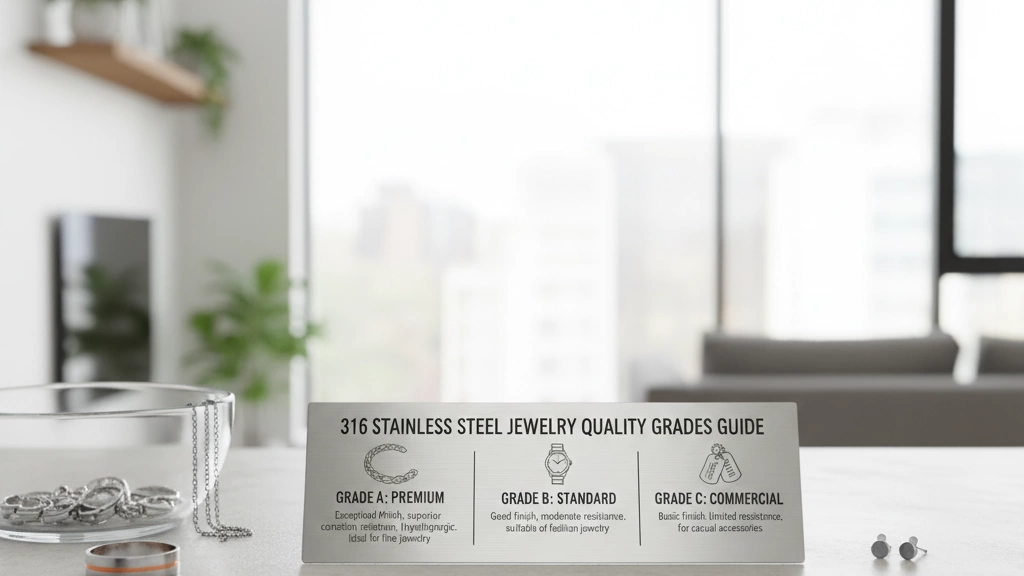
“Surgical grade” vs “medical grade” – what it really means
In wholesale 316 stainless steel jewelry, “surgical grade” and “medical grade” are mostly marketing terms unless they’re backed by real standards.
In plain talk:
- Surgical grade stainless steel jewelry usually means 316L with low carbon and better corrosion resistance, but not automatically certified for medical implants.
- Medical grade or implant grade should refer to materials that match strict standards like ASTM F138 or ISO 5832‑1 – these are used for real medical implants, not just fashion jewelry.
- Most 316L stainless steel jewelry wholesale on the market is inspired by surgical steel, but not produced to full implant specs (and it doesn’t need to be for normal wear).
When I position our pieces, I clearly separate “surgical-grade style 316L” from implant-grade body jewelry, so there’s no confusion or misleading hype.
Implant grade vs surgical grade vs regular 316
For buyers comparing quality levels:
-
Implant grade (ASTM F138 / ISO 5832‑1)
- Ultra‑clean, low impurities
- Used for body piercings and medical hardware
- Higher cost, smaller production volume
-
Surgical grade 316L jewelry
- High‑quality 316L stainless steel jewelry wholesale, good for sensitive skin
- Ideal for earrings, rings, bracelets, necklaces in mainstream fashion markets
-
Regular 316 / mixed stainless
- Might be labeled “316,” but could be commercial 316 or even 304 blends
- Cheaper, more variation in color and corrosion resistance
For body jewelry and piercings, I stick to real implant‑grade or verified 316L. For fashion jewelry, surgical‑grade 316L is the sweet spot on price vs performance.
ASTM & ISO standards you should actually care about
If a supplier claims “medical grade stainless steel jewelry”, ask what standard they’re referring to:
- ASTM F138 – Wrought 18Cr‑14Ni‑2.5Mo stainless steel for surgical implants
- ISO 5832‑1 – International standard for implant stainless steels
If they can’t name or show these, it’s not true implant grade, just high‑quality 316L stainless steel. Real suppliers will reference:
- Chemical composition reports
- Heat treatment and cleanliness
- Nickel and molybdenum percentages
This is non‑negotiable if you sell body safe stainless steel piercing jewelry or anti allergy stainless steel earrings bulk for sensitive clients.
AISI 316 vs commercial 316 vs recycled stainless steel
Not all “316” is equal. You’ll see three realities in the 316 stainless steel jewelry wholesale market:
-
AISI 316 / 316L
- Defined composition range (Cr, Ni, Mo, C)
- Stable color, predictable corrosion resistance
-
Commercial 316
- Looser control, still roughly 316 but with wider tolerance
- Cheaper, more batch‑to‑batch color shifts
-
High recycled stainless steel content
- Eco‑friendly angle, but quality depends on sorting and refining
- If managed well: same performance as virgin steel
- If poorly controlled:
- Slightly different silver/grey tone
- Hardness variations (too soft or too brittle)
- More chance of spots, uneven polish, or faster wear
We use controlled recycled content with strict testing, so we get both sustainability and consistent mirror finish 316L jewelry quality.
How recycled content changes color, hardness, durability
If you’re buying cheap stainless steel jewelry wholesale, you’re often buying uncontrolled recycled blends. That can show up as:
-
Color:
- Warm grey, yellowish tone, or dull surface compared to premium 316L
-
Hardness:
- Over‑hard: harder to polish, sharp edges, brittle plating
- Too soft: scratches faster, bends on rings and cuffs
-
Durability:
- More prone to micro‑rust near joints
- Plating wears off unevenly on PVD coated stainless steel jewelry
For premium stainless steel jewelry wholesale, I pay more for clean, consistent 316L with tested recycled ratios, not random scrap.
Realistic quality levels in wholesale stainless steel jewelry
In the global market right now, you’ll mostly see these tiers:
-
Top tier – Premium 316L / “surgical‑grade” jewelry
- Verified 316L, strong corrosion resistance
- Clean polish, comfort fit, stable color
- Proper PVD / vacuum ion plated jewelry wholesale options
-
Mid tier – Commercial 316 / mixed 316L
- Decent finish, some variation between batches
- Good for budget‑friendly collections and marketplace price wars
-
Low tier – 304 or low‑spec “316”
- Often sold as wholesale cheap stainless steel jewelry
- Higher risk of tarnish, rust, nickel release, and returns
Our position is clear:
- For brand‑building and long‑term B2B stainless steel jewelry sourcing, go for premium 316L stainless steel jewelry wholesale.
- Use cheaper grades only where your customers truly expect “fast fashion” and low lifetime value.
This is how I protect margins, reviews, and repeat orders while still competing on price globally.
Coatings, Plating, and Color Finishes
PVD Coating on 316 Stainless Steel Jewelry Wholesale
For 316 stainless steel jewelry wholesale, coating quality is what separates cheap stainless steel jewelry from premium stainless steel jewelry. I use PVD coating (Physical Vapor Deposition) on most of our 316L lines because it’s simply more reliable for global buyers:
- PVD is done in a vacuum chamber, so the color bonds tightly to the 316L base.
- It creates a hard, dense, scratch‑resistant layer that doesn’t peel like weak plating.
- It’s ideal for waterproof stainless steel jewelry, daily wear, sweat, and humidity.
- Perfect for brands selling on Amazon, Shopify, or marketplaces where returns kill profit.
If you want tarnish resistant jewelry wholesale that can handle real‑world wear, PVD on 316L is the current standard.
PVD vs IP Plating vs Electroplating
You’ll see a lot of terms thrown around: PVD, IP plating, and electroplating. Here’s how I position them in our catalog:
-
PVD / IP Plating (vacuum ion plated jewelry wholesale)
- Basically the same family of tech (many factories use the terms together).
- Done in a vacuum with ionized metal vapor.
- Best for durability, color stability, and premium pricing.
- Ideal for wholesale waterproof gold jewelry 316L.
-
Traditional Electroplating
- Low‑cost, older method.
- Color sits more on the surface, can wear off faster with sweat, friction, or perfume.
- Fine for ultra‑cheap stainless steel jewelry wholesale, but expect more returns and complaints long‑term.
If you’re building a stainless steel jewelry premium wholesale line, go PVD/IP. If you want wholesale stainless steel jewelry cheap just to test a market, electroplating might be acceptable—but be ready for lower repeat purchase rates.
18K Gold, Rose Gold, and Black PVD on 316L
Our main color finishes for 316L stainless steel jewelry wholesale:
-
18K Gold PVD on 316L
- Warm, luxury tone close to real 18K.
- Works great for non tarnish stainless steel necklaces, chains, and rings.
- Strong demand in US/EU/LatAm for “waterproof gold jewelry”.
-
Rose Gold PVD Stainless Steel Jewelry
- Soft pink tone that performs well with female and minimalist segments.
- Popular for bracelets, minimalist rings, stacking sets, and anti allergy stainless steel earrings bulk.
-
Black PVD Stainless Steel Jewelry
- Deep, even black; not grey, not patchy.
- Big seller for men’s 316L stainless steel rings bulk, chains, and cuff bracelets.
- Also used in body safe stainless steel piercing jewelry for a sleek look.
All these finishes sit on 316L stainless steel so the base metal stays rust proof, saltwater resistant, and corrosion resistant.
Coating Thickness, Wear Resistance, and Color Retention
For serious wholesale, I focus on coating thickness and process stability, not just “gold color”:
- Premium PVD thickness: usually around 0.3–0.8 μm for fashion jewelry
- Thicker is not always better; even, controlled thickness is what gives good life.
- Good PVD will last years in normal daily wear (not months).
- Proper pre‑polishing of the 316L base is critical for:
- Strong adhesion
- Smooth color
- Better nickel release performance (less irritation)
When buyers ask, I position it very simply:
- Cheap plating = good for short‑term fashion
- Quality PVD = good for everyday, shower‑safe, sweat‑safe jewelry
How Coating Quality Affects Perceived Value and Resale Price
Your profit margin on wholesale 316 stainless steel jewelry isn’t just about material cost—it’s about how long the jewelry still looks “new” on your customer’s body:
-
High‑quality PVD
- Keeps color rich and shiny longer
- Supports higher retail prices and premium branding
- Drives 5‑star reviews, fewer returns, more repeat customers
- Lets you market as waterproof, sweat‑proof, non‑tarnish jewelry
-
Low‑grade plating
- Fades to dull yellow/grey in weeks or months
- Creates black spots, patchy color, and “cheap” look
- Kills your rating on marketplaces and increases support workload
If you’re scaling globally, you want people to feel that your 316L stainless steel jewelry wholesale line looks close to real gold, wears like everyday jewelry, and doesn’t embarrass them in 3 months. That’s what good coating delivers—and why we don’t cut corners on it.
How to Spot Fake or Low‑Grade “316” Stainless Steel Jewelry Wholesale
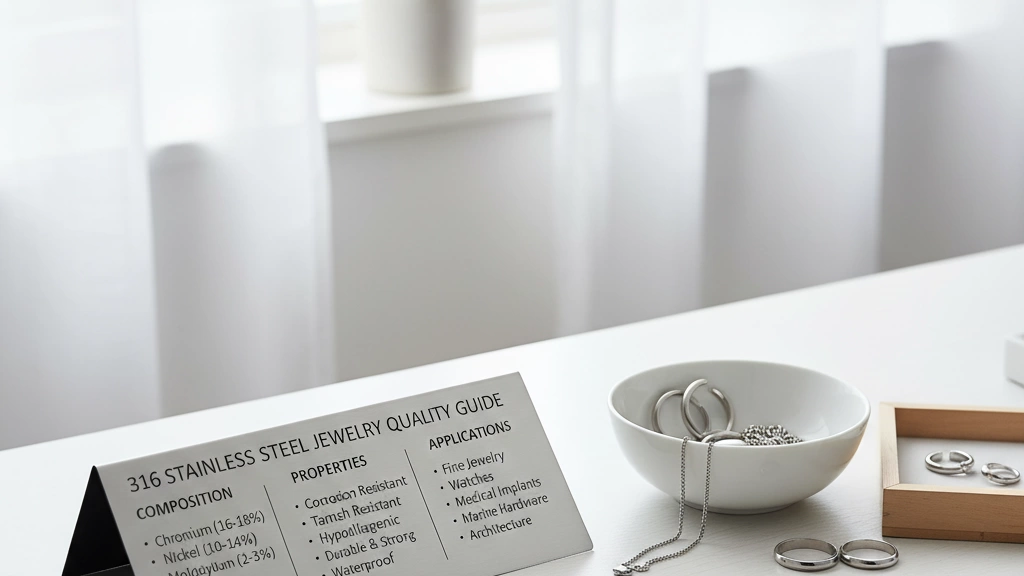
When I buy or produce 316 stainless steel jewelry wholesale, I assume every “316” claim is marketing until it’s proven. Here’s how I actually filter out fake or low‑grade 316L stainless steel jewelry before it damages the brand.
Common fake “316” and “surgical steel” tricks
Watch for these red flags vendors use on cheap stainless steel jewelry wholesale:
- Vague labels only: “Surgical steel”, “stainless steel”, “high quality steel” with no 316 / 316L / ASTM / AISI code.
- Over‑promises: “Never fades”, “100% no allergy for everyone”, “never rust in any situation” – nobody honest says never.
- Ultra‑low pricing: If the price is closer to 304 or zinc alloy but advertised as 316L, it’s almost never real.
- Mixed material listings: Same product line shows “stainless steel / alloy / copper” in one description – risk is huge.
- Fake “surgical grade” wording: No mention of ASTM F138, ISO 5832‑1, or any standard, just the word “surgical” as a marketing hook.
If a supplier can’t clearly state 316 or 316L plus basic composition, I don’t treat them as serious.
Why the magnet test isn’t enough
The magnet test is everywhere, and it’s overrated:
- Some 316L stainless steel jewelry can show slight magnetism because of cold‑working and machining.
- Some cheap alloys can be non‑magnetic and still rust and irritate skin.
- Magnet = one data point only. It never replaces proper XRF testing, lab reports, or corrosion tests.
Use the magnet as a quick screen, not a decision tool.
Visual signs of low‑grade stainless steel jewelry
When I check wholesale cheap stainless steel jewelry, I look for:
- Uneven color: Yellowish, dull gray, or patches that don’t match across pieces.
- Rough edges and poor polish: Sharp edges, inconsistent shine, swirl marks.
- Thin, fragile chains or clasps: Feels light, bendy, or “toy‑like” in hand.
- Inconsistent stamping: Random “316L” marks that look laser‑etched badly or placed in weird locations.
Low‑grade metal usually comes with low‑grade finishing. The hand feel tells you a lot.
How rust, discoloration, and black spots show up
With fake 316 stainless steel jewelry, problems show up fast:
-
Rust spots around:
- Edges
- Jump rings
- Clasp areas
- Black or green staining on the skin or on the back side of pendants and rings.
- Gold color fading into a cheap, brassy tone after a few weeks.
- Discoloration in high‑contact zones (ring underside, bracelet inner side).
Real 316L stainless steel jewelry wholesale should stay clean and stable in normal sweat and water for a long time.
How fast tarnishing kills your wholesale brand
If you push wholesale cheap stainless steel jewelry that isn’t real 316/316L:
- You get returns and refunds within weeks.
- Your Amazon, Shopify, Etsy, Lazada, Shopee reviews get hit with “turned black in 2 weeks
Testing Methods Smart Buyers Actually Use for 316 Stainless Steel Jewelry Wholesale
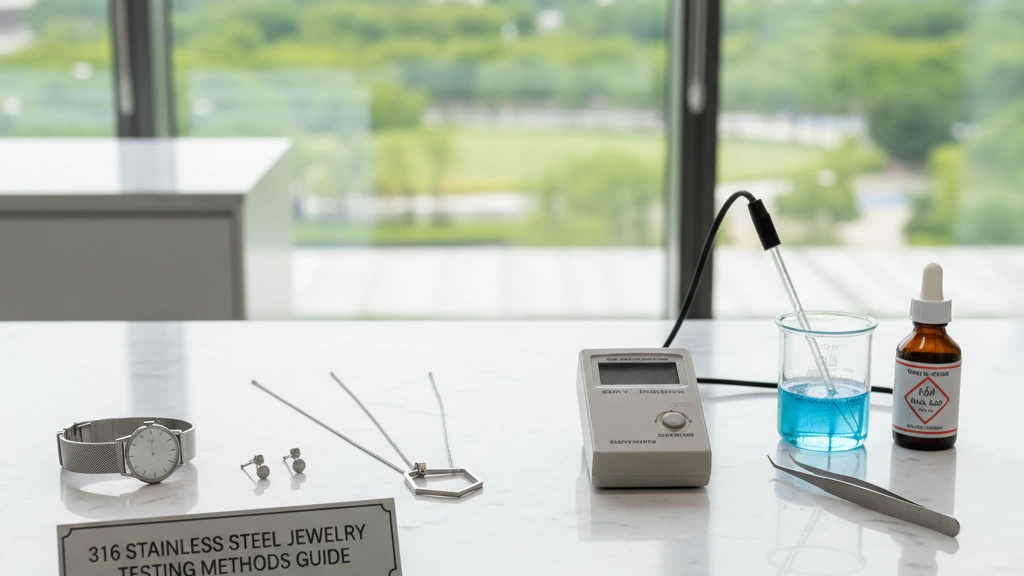
Why you must test, not just trust
If you’re buying 316/316L stainless steel jewelry wholesale, you cannot rely only on supplier claims or pretty photos. Testing protects you from:
- Fake “316L / surgical steel” with high nickel and low chromium
- Mixed batches (some pieces 304, some 201, some 316)
- Rusting, fast‑tarnish pieces that destroy reviews and repeat orders
I treat testing as a standard part of sourcing, same level as price negotiation and MOQ.
XRF gun analysis for stainless steel jewelry
Most serious buyers use XRF (X‑ray fluorescence) testing at least on samples and random batches.
- Handheld XRF guns read the actual alloy composition of your 316 stainless steel jewelry
- In seconds, you see percentages of:
- Nickel (Ni) – usually 10–14% for 316 / 316L
- Chromium (Cr) – around 16–18%
- Molybdenum (Mo) – ~2–3% (key for corrosion resistance)
- If Mo is missing or Cr is low, it’s not real 316 / 316L
- Ask your stainless steel jewelry supplier (China / Global) for XRF reports or test at a local lab
For medium and big volumes, this is the easiest way to filter out cheap stainless steel jewelry sold as “premium”.
Checking nickel, chromium, and molybdenum
When I look at XRF data for 316L stainless steel jewelry wholesale, I focus on:
-
Chromium (Cr) – corrosion resistance, “rust proof” behavior
- If Cr < 16%, walk away
-
Nickel (Ni) – strength + possible allergy risk
- 316L is “low carbon”, not nickel‑free; nickel should be in a normal 10–14% range
-
Molybdenum (Mo) – real “marine grade” behavior
- No Mo = not 316/316L; Mo < 2% means weaker saltwater resistance
This is how you separate real 316L from “316‑like” alloys made with cheap recycled mix.
Nitric acid spot testing basics
If you don’t have XRF access, a nitric acid spot test is a quick, low‑cost check (done by pros or labs):
- Put a tiny drop of diluted nitric acid on a hidden spot of the jewelry
- True 316 / 316L stainless steel:
- Usually no strong reaction, no green bubbling, no deep stain
- Cheaper low‑grade steel (201 / 430 / plated base metal):
- Can discolor, pit, or react strongly
Important:
- This is a lab‑style test, not for casual office use
- Always use proper PPE (gloves, goggles, ventilation) or let a professional lab do it
Sweat simulation & salt‑spray testing
Rust and color wear show up when customers sweat, shower, or hit the beach. That’s why I like:
-
Sweat simulation tests
- Jewelry is soaked in artificial sweat and heated
- Checks nickel release and plating durability
-
Salt‑spray (salt fog) tests
- Simulated saltwater environment for 24–72+ hours
- Shows how “waterproof stainless steel jewelry” really performs
Good 316L stainless steel with quality PVD coating will stay bright and not show rust, black spots, or peeling in these tests.
Random batch testing like a pro
Serious wholesale buyers treat testing as a routine QA system, not a one‑time thing:
- Test samples before confirming a bulk order
- For each shipment of wholesale 316 stainless steel jewelry:
- Pick random pieces from different cartons
- Run XRF on a few pieces per style
- Visually check for:
- Color consistency
- Pitting / tiny rust points
- Rough edges or poor finishing
- For long‑term partners, I still do spot tests every few orders
This keeps your catalog clean, protects your brand, and lets you confidently sell high quality stainless steel jewelry wholesale as truly tarnish resistant, waterproof, and skin‑safe.
Hypoallergenic Stainless Steel Jewelry Wholesale Basics
What “hypoallergenic stainless steel” really means today
When I say hypoallergenic stainless steel jewelry wholesale, I’m talking about pieces that release
Finishing and Craftsmanship in 316L Stainless Steel Jewelry Wholesale
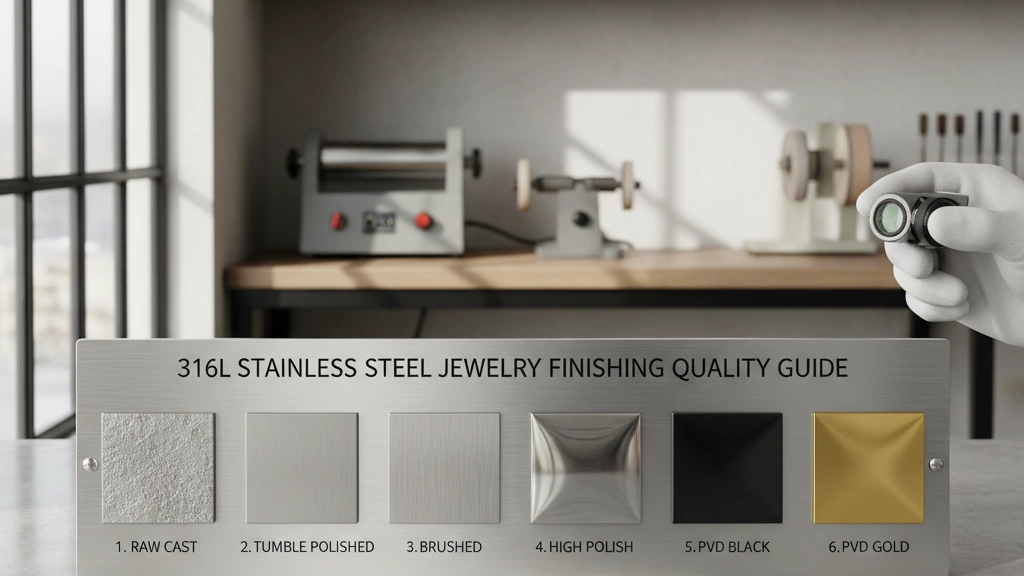
When you sell 316L stainless steel jewelry wholesale, finishing and craftsmanship are what separate “cheap stainless” from a premium brand. Same metal, totally different feel.
Mirror Polish vs Brushed vs Matte
For 316L stainless steel jewelry wholesale, I mainly use three surface finishes:
-
Mirror polish (high gloss)
- Super shiny, reflective, “luxury” look
- Best for: rings, chains, bangles, pendants
- Shows fingerprints more, but it sells better online because it looks expensive in photos
-
Brushed finish (satin look)
- Fine, linear texture, less reflective
- Great for: men’s jewelry, modern minimal designs, watches
- Hides micro-scratches better in daily wear
-
Matte finish (sandblasted / frosted)
- Soft, low-gloss, “understated” look
- Works for: street style pieces, industrial or minimalist designs
- Needs good sealing and cleaning, otherwise it can trap dirt and sweat
In premium stainless steel jewelry wholesale, I often mix finishes (mirror edges + brushed center) to make the piece look more engineered and high-end.
Why 8K High Polish Matters
For high quality stainless steel jewelry wholesale, 8K or higher polish is the standard I push for:
- Stronger visual impact – more shine, looks closer to fine jewelry
- Smoother surface – better for plating, less chance of pinholes or uneven color
- Better feel in hand – customers instantly feel the “premium” difference
- Fewer returns – cheap low-polish pieces look dull and “gray” in real life
If a factory can’t hit a consistent 8K mirror finish on 316L, they’re not a premium stainless steel jewelry manufacturer, they’re a budget supplier.
Edge Rounding, Deburring, and Comfort Fit
This part is where a lot of wholesale cheap stainless steel jewelry falls apart:
-
Edge rounding
- All edges should be slightly soft, not sharp
- Especially important for rings, cuffs, hoop earrings, pendants
-
Deburring
- No burrs, no rough corners, no sharp cut ends
- Poor deburring = scratching skin, hair pulling, snagging on clothes
-
Comfort fit for rings and cuffs
- Inner curve slightly rounded (not flat)
- Makes thick stainless steel rings feel easy to wear and remove
- Comfort fit is a big selling point for men’s rings and wedding bands
When I review samples from a new stainless steel jewelry supplier, I always run my finger along every edge. If I feel a scratchy spot, I know their finishing line is not controlled.
Surface Smoothness, Plating & Skin Comfort
On 316L stainless steel jewelry wholesale, the base finish decides how well PVD coating, IP plating, or gold plating will perform:
-
Smooth surface = better plating
- More even color
- Better adhesion
- Fewer early wear spots on high-friction areas
-
Less irritation
- Rough micro-scratches can trap sweat and dirt
- Smooth 316L is more comfortable for sensitive skin, especially for earrings and body jewelry
If you want 18K gold PVD, rose gold PVD, or black PVD to look premium and last longer, you must start with high-polish, properly finished 316L.
Premium vs Budget Factories: The Real Difference
Most factories can say “316L stainless steel jewelry wholesale” on paper. The gap is in the finishing:
Premium factories:
- Multiple polishing stages (rough → fine → 8K mirror)
- Strict QC for edges, surfaces, and plating adhesion
- Consistent color across batches (gold tone, black PVD, etc.)
- Clean inner surfaces on rings and clasps, not just the visible side
Budget factories:
- Fast, aggressive polishing that leaves waves and micro-scratches
- Uneven plating, color variations, and more tarnish complaints
- Sharp edges on cheap chains, lockets, and cuffs
- Look okay in pictures, feel cheap in hand
If you want your brand positioned as high quality stainless steel jewelry wholesale instead of “just another cheap stainless seller,” invest in:
- 316L base material
- 8K mirror polish or clean brushed finishes
- Proper edge rounding and comfort fits
- Smooth surfaces ready for premium PVD
That’s what makes your 316L stainless steel jewelry look and feel like a real product line, not just low-cost metal accessories.
Pricing Reality for 316 Stainless Steel Jewelry Wholesale
What drives 316 stainless steel jewelry cost today
For wholesale 316 stainless steel jewelry, price isn’t random. Your quote usually reflects:
- Steel grade: 316 vs 316L vs 304 vs “marine grade”
- Design complexity: thick rings, solid chains, micro‑pavé, moving parts
- Finish: mirror 8K polish, brushed, matte, sandblasted
- Coating: raw steel vs PVD gold vs IP plating vs cheap electroplating
- Production scale: order size, repeat orders, and forecasted volumes
- Compliance: REACH / CPSIA testing, nickel release reports, third‑party lab costs
If two suppliers quote wildly different prices for “same” 316L stainless steel jewelry, they are not offering the same quality level.
Raw material pricing and impact on quotes
Stainless steel is still cheaper than silver and gold, but raw material costs do move.
What affects your price per piece:
- Global nickel and molybdenum prices
- Currency rates (USD vs CNY, EUR, GBP, etc.)
- Use of new vs recycled stainless steel
- 316L vs 304: 316L has more nickel + molybdenum → higher cost, but better performance
When raw steel prices jump, any supplier holding the same quote for months is likely cutting corners somewhere else (finishing, coating, QC).
Quality tiers & typical wholesale price ranges
These are realistic ex‑factory wholesale ranges I see for 316L stainless steel jewelry in bulk:
| Tier | Description | Typical Range* (USD/pc) |
|---|---|---|
| Ultra‑cheap | Thin, rough, weak plating, basic polish | $0.20 – $1.00 |
| Entry / Budget | Basic 316L, light PVD, simple designs | $1.00 – $2.50 |
| Mid / Brand‑ready | Solid 316L, good polish, decent PVD, QC checked | $2.50 – $6.00 |
| Premium / Designer | Heavy, detailed, 8K polish, thick PVD, brand packaging | $6.00 – $15.00+ |
*Depends heavily on weight, stones, and design complexity.
MOQ ranges for different quality levels
MOQ (minimum order quantity) usually scales with quality and customization:
| Type of 316/316L stainless steel jewelry | Typical MOQ per design |
|---|---|
| Standard catalog, cheap plating | 50 – 200 pcs |
| Standard catalog, PVD 18K / black | 30 – 100 pcs |
| Custom logo / simple mold | 100 – 300 pcs |
| Full custom, complex molds | 200 – 500+ pcs |
Lower MOQs almost always mean less customization or higher unit cost.
Hidden costs of cheap 316 stainless steel
Cheap stainless steel jewelry looks profitable on paper but costs you later:
- Higher return rates: plating fades, rust spots, skin reactions
- Bad reviews: hits your Amazon / Shopify / marketplace listing permanently
- Extra CS workload: refunds, replacements, angry emails
- Inventory write‑offs: you end up dumping bad lines at a loss
- Brand damage: harder to sell premium lines later under the same brand
Spending $0.50 less per piece and losing the customer lifetime value is bad math.
Balancing quality, price & margin in your catalog
Here’s how I structure 316L stainless steel jewelry wholesale to keep margins and reputation healthy:
-
Use tiers in your catalog
- Budget 316L line: simple, thin, light PVD, low risk items
- Core mid‑tier line: strong 316L, good PVD, best‑seller designs
- Premium line: heavy, 8K polish, thick PVD, branding & packaging
-
Aim for margin, not just low cost
- Budget: 3–4x landed cost
- Mid‑tier: 4–6x landed cost
- Premium: 5–8x landed cost
-
Pay more where it matters
- Spend on better 316L, quality PVD, and finishing
- Save on over‑complicated designs that don’t sell in volume
If you’re building a long‑term brand around 316 stainless steel jewelry wholesale, it’s smarter to be “fair‑priced and solid quality” than “cheapest on the platform for one season.”
Choosing a Reliable 316 Stainless Steel Jewelry Wholesaler
When you buy 316 stainless steel jewelry wholesale, your supplier can make or break your brand. I focus on factories and partners that protect margin, quality, and delivery time – not just offer the lowest price.
What to Look For in a Serious Stainless Steel Jewelry Supplier
A solid 316L stainless steel jewelry wholesale supplier should:
- Specialize in 316/316L, not just “all kinds of metals”
- Offer test reports (XRF, nickel release, REACH / CPSIA compliance)
- Provide stable PVD coating (gold, rose gold, black) with clear warranty
- Show real photos/videos of production lines, not just catalog renders
- Support OEM / custom stainless steel jewelry and logo engraving
- Have clear policies for defects, returns, and re-orders
If a supplier dodges questions on material grade or testing, I don’t move forward.
10‑Point Checklist for Vetting 316L Stainless Jewelry Factories
Use this quick checklist before you place your first wholesale order:
- Material: Confirm 316L only for jewelry (not 304 or mixed steel).
- Certs: Ask for material certificates + REACH/CPSIA compliance.
- Testing: Check if they do XRF and nickel release tests in-house or via third party.
- Coating: Confirm PVD/IP plating thickness and color options (18K gold, rose gold, black).
- Finishing: Ask for mirror polish (8K) samples for chains, rings, and bracelets.
- MOQ: Clarify MOQs per design/color/size for wholesale stainless steel jewelry.
- Lead Time: Get realistic production + shipping lead times in writing.
- QC System: Request QC flow chart or photos of inspection process.
- Samples: Order paid samples of different SKUs to compare finish and consistency.
- Communication: Evaluate response speed, detail, and professionalism.
If they pass all 10, you’re likely looking at a premium stainless steel jewelry manufacturer, not a trading middleman.
Key Questions to Ask Before Placing a Bulk Order
When I talk to a 316 stainless steel jewelry supplier, I always ask:
- “Is this 316 or 316L? Can you share the steel mill certificate?”
- “Do you guarantee nickel-safe / hypoallergenic levels for EU and US?”
- “What’s your percentage of 316L vs recycled material in production?”
- “What’s your defect rate and how do you handle quality claims?”
- “How long does your PVD gold plating last in daily wear on 316L?”
- “Can you show current customer brands or markets you supply to?”
Their answers tell you if they understand global B2B stainless steel jewelry sourcing or just chase quick orders.
How to Verify Production Capacity and Consistency
You don’t want a supplier that collapses after your first big order. To check capacity and stability:
- Ask for factory size, number of workers, and monthly output (pcs/month)
Quality Systems, Guarantees, and Certifications for 316 Stainless Steel Jewelry Wholesale
When you’re buying 316 stainless steel jewelry wholesale (or 316L stainless steel jewelry wholesale) in volume, quality systems matter more than price. If a supplier can’t prove how they control quality, you’re gambling with your brand.
What Real Quality Control Looks Like
A serious stainless steel jewelry factory doesn’t “just inspect at the end”. There’s a clear process:
-
Material control
- Verified 316L / 316 batches from certified steel mills
- XRF material tests on incoming steel bars/sheets
- Lot numbers tracked from raw steel to finished jewelry
-
Process control
- CNC, casting, cutting, polishing with written SOPs
- Checkpoints after machining, polishing, and PVD plating
- Random sampling on each batch (AQL standards for defects)
-
Final inspection
- Check polish, edges, stone setting, plating color, and marking (e.g. “316L”)
- Wear‑simulation: simple sweat wipe tests, rub tests on plating
- Visual check for micro‑scratches, pits, black spots, and rough edges
If your cheap stainless steel jewelry wholesale supplier doesn’t talk about process, just “good quality”, that’s a red flag.
In‑House Lab Testing vs Third‑Party Lab Testing
You want both when possible.
In‑house testing (for every batch or regularly):
- XRF gun check for nickel, chromium, molybdenum content
- Simple corrosion tests (saltwater dip / sweat solution)
- Adhesion tests for PVD / IP plating
Third‑party testing (for compliance and marketing):
- REACH / RoHS / CPSIA test reports
- Nickel release test reports for hypoallergenic stainless steel wholesale
- Periodic verification of 316L composition and heavy metals
We run in‑house checks to keep daily quality stable, and use independent labs to back up what we claim to our global customers.
Useful Certifications for Stainless Steel Jewelry Wholesale
No, you don’t need every certificate on earth. You just need the right ones for your market and product line.
Look for or ask about:
-
Material / grade related
- Reference to ASTM F138 and ISO 5832‑1 for medical‑grade 316L (especially for body jewelry, piercings)
- Mill certificates for 316L / 316 steel batches
-
Safety & compliance
- REACH compliant stainless steel jewelry (EU)
- CPSIA compliant jewelry supplier (US)
- Nickel release test per EU Nickel Directive for “anti allergy stainless steel earrings bulk”
-
Factory / system
- ISO 9001 (quality management) – useful for larger B2B stainless steel jewelry sourcing
- Audit reports if you’re working with big platforms or retail chains
Ask to see real PDFs with your supplier’s name on them, not random scanned documents with data that doesn’t match the products.
Anti‑Tarnish and Color‑Fade Guarantees
With good PVD coated stainless steel jewelry on 316L, you can confidently build wholesale waterproof gold jewelry 316L and “non tarnish stainless steel necklaces” into your brand.
What we usually promise (and what serious suppliers can stand behind):
- 316L base is rust‑proof / tarnish resistant in normal daily wear
- Gold / rose gold / black PVD keeps color significantly longer than traditional electroplating
- Reasonable guarantee window:
- 6–12 months against abnormal color‑fade under normal use
- Clear exclusions: chemicals, perfume abuse, pools with strong chlorine, extreme wear
If a supplier refuses any anti‑tarnish or color‑fade guarantee, they’re probably using super‑thin cheap plating.
Sample Policies and Trial Orders
If you’re planning real volume, you should never skip test orders.
What I recommend (and what we do with serious wholesale buyers):
-
Low‑risk sample pack
- Mixed SKUs: rings, chains, bracelets, earrings, maybe some body jewelry
- Include mirror finish 316L jewelry, PVD gold, black PVD, and plain steel pieces
- Let you test quality, finishing, and waterproof performance in your own market
-
Small trial order
- Reasonable MOQ for first order (for example 50–100 pcs per style or lower for testing)
- Clear lead time and packing details
- Agreement on QC standard, return or remake policy for defective batches
-
Ongoing protection
- Written terms for how we handle quality issues: repair, replace, or credit
- Photos + videos for pre‑shipment checks on bulk orders
- Option for third‑party inspection before shipping, if you want extra security
For wholesale 316 stainless steel jewelry, your margin doesn’t just come from “cheap price”. It comes from stable quality, fewer returns, and consistent reviews. Strong quality systems, real certifications, and clear guarantees are what actually protect your brand.

0 comments